The Charles Hosmer Morse Museum of American Art: Winter Park's World-Class Tiffany Treasure
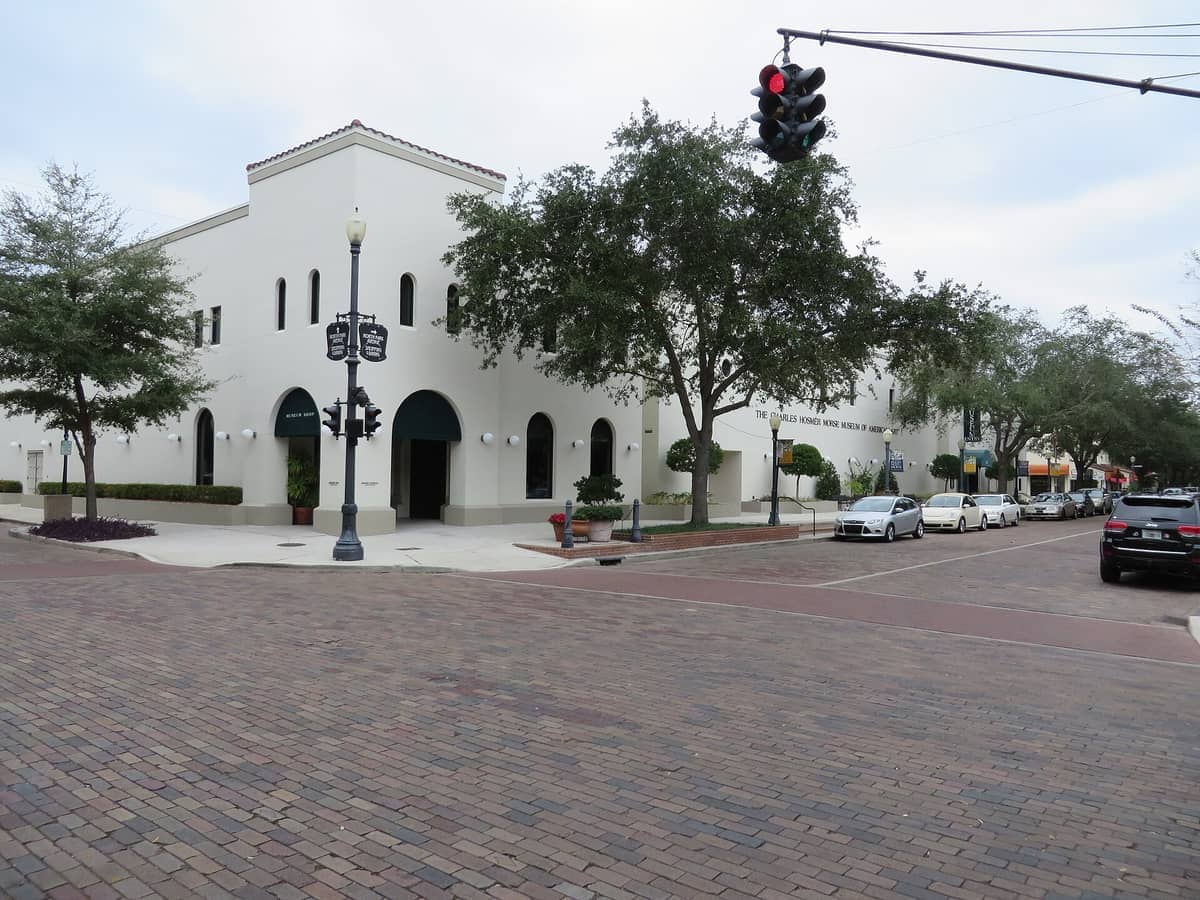
Quietly occupying a stretch of North Park Avenue in Winter Park, the Charles Hosmer Morse Museum of American Art houses the world's most comprehensive collection of works by Louis Comfort Tiffany. With admission at $8 and free Friday evening hours from November through April, it delivers one of the best value-per-hour experiences in the greater Orlando area.
Quick Facts
- Location
- 445 N Park Avenue, Winter Park, FL 32789
- Getting There
- Winter Park SunRail/Amtrak station, approx. 5-min walk north on Park Ave
- Time Needed
- 1.5 to 2.5 hours
- Cost
- Adults $8 | Seniors $7 | Students $3 | Under 12 free | Free Fri 4–8 PM (Nov–Apr)
- Best for
- Art lovers, design enthusiasts, couples, architecture fans, rainy-day culture seekers
- Official website
- morsemuseum.org
What Is the Morse Museum, and Why Does It Matter?
The Charles Hosmer Morse Museum of American Art is not a regional curiosity. It holds the world's largest and most comprehensive collection of works by Louis Comfort Tiffany, the American designer whose stained glass redefined decorative art at the turn of the twentieth century. That means the Morse outranks much larger institutions on this single, extraordinary subject. Scholars fly in from Europe. Interior design students make pilgrimages from across the country. And most first-time visitors walk in expecting a pleasant diversion and walk out genuinely moved.
Beyond Tiffany, the museum covers American art and decorative objects from the late nineteenth and early twentieth centuries, including paintings, ceramics, and art jewelry. But make no mistake: Tiffany is the reason to come, and the centerpiece Tiffany Chapel reconstruction is one of the most stunning interiors you will encounter in any Florida museum, full stop.
💡 Local tip
Visiting between November and April? Friday evenings from 4:00 to 8:00 PM are completely free for all visitors. This is the best-kept practical secret about the Morse: full access, no ticket cost, and crowds that are notably lighter than Saturday mornings.
The Collection: Tiffany Glass, Light, and American Craft at Its Peak
Louis Comfort Tiffany worked at the intersection of art, architecture, and industrial craft. His studio produced everything from small decorative lamps to monumental architectural windows, and the Morse holds examples across that entire spectrum. Walking the galleries, you move from intimate desk lamps with jewel-toned dragonfly shades to full-scale leaded windows designed for churches and private homes. The glass itself demands time. Colors shift as light conditions change throughout the day, and the layering of opalescent glass creates depth that photographs never fully reproduce.
The crown of the collection is the reconstructed Tiffany Chapel, originally created for the 1893 World's Columbian Exposition in Chicago. After the exposition, the chapel was installed in a New York church, then fell into disrepair and was partially dispersed. The museum's founder, Jeannette Genius McKean, spent decades recovering the original elements. The reconstruction at the Morse is the result of that patient, obsessive effort. Standing inside it, surrounded by Byzantine-influenced mosaics, marble, and windows glowing with amber and cobalt light, you get a rare sense of Tiffany's full architectural ambition rather than just his table-scale work.
Beyond the chapel, look for the collection of Tiffany's personal sketches and design drawings, which reveal the working method behind finished pieces. The jewelry displays show a different register of his talent: small, precise objects where enamel, gemstones, and metalwork combine with the same chromatic logic as his large windows.
Tickets & tours
Hand-picked options from our booking partner. Prices are indicative; availability and final rates are confirmed when you complete your booking.
Pirates Cove Adventure Mini Golf
From 18 €Instant confirmationFree cancellationWild Florida 1-hour airbot adventure with transportation
From 107 €Instant confirmationFree cancellationKids Eat Free Card Orlando
From 28 €Instant confirmationFree cancellationManatees swimming and snorkelling experience by boat from Orlando
From 85 €Instant confirmationFree cancellation
The Museum's History and Why It Is in Winter Park
The Morse's origins trace to Charles Hosmer Morse, a wealthy industrialist who settled in Winter Park in the late nineteenth century and shaped the cultural landscape of the town. His granddaughter, Jeannette Genius McKean, and her husband Hugh McKean, a painter who had actually studied under Tiffany at the Byrdcliffe arts colony in New York, began collecting Tiffany works with serious intent. When Tiffany's Long Island estate, Laurelton Hall, burned in 1957, the McKeans were among the first to rescue surviving architectural elements from the ruins. That salvage operation forms the emotional backbone of the collection.
The museum opened at its current location at 445 North Park Avenue on July 4, 1995. It sits directly on Winter Park's Park Avenue, a walkable commercial street lined with independent shops and restaurants. The location is not accidental: Winter Park has cultivated a reputation as Orlando's cultural counterweight, and the Morse anchors that identity. The Winter Park neighborhood rewards a full half-day: visit the museum, then walk south along Park Avenue for lunch or browse the Saturday morning Farmers Market at the nearby Central Park.
How the Experience Changes by Time of Day
Morning visits, particularly on weekdays, offer the quietest conditions. The galleries are small and intimate by design, which means a crowd of even twenty people in a single room changes the atmosphere considerably. Arriving close to the 9:30 AM opening on a Tuesday or Wednesday gives you the best chance of standing alone in front of major works, which matters with Tiffany glass: you want to move slowly, shift your angle, let your eyes adjust to each piece without feeling rushed by people behind you.
Saturday mornings draw visitors combining the museum with the Park Avenue Farmers Market, so expect a noticeable uptick in foot traffic from around 10:30 AM onward. Sunday afternoons, with the 1:00 PM opening, tend to attract a relaxed, unhurried crowd. The Tiffany Chapel feels particularly resonant in late-afternoon light when the sun angle shifts the color temperature of the windows.
The Friday evening free hours in winter season have a different character entirely. The museum feels slightly more social, with students, local residents, and couples treating it as a cultural outing rather than a tourist stop. The atmosphere is low-key and the experience genuinely pleasant, especially if you follow the visit with dinner on Park Avenue.
ℹ️ Good to know
Hours: Tue–Sat 9:30 AM–4:00 PM | Sun 1:00–4:00 PM | Closed Monday. Extended Friday hours (4:00–8:00 PM) run November through April only. Closed most major holidays — confirm dates on the official website before visiting around Thanksgiving, Christmas, or New Year's.
Getting There: Park Avenue Access and Transit Options
The museum's single most useful logistical fact: the Winter Park train station is a short walk away. SunRail (Central Florida's commuter rail) and Amtrak stop at Winter Park station; Brightline does not. From the station, the museum is roughly a five-minute walk north along Park Avenue. For visitors coming from downtown Orlando or along the I-4 corridor, this train option removes the parking calculation entirely.
Drivers will find street parking on Park Avenue and in nearby municipal lots, though Saturday mornings can require a short walk from a few blocks away. For broader context on getting around the Orlando area without a car, the getting around Orlando guide covers SunRail routes and LYNX bus connections in detail.
Practical Details: Accessibility, Photography, and What to Bring
The Morse is fully single-floor, which makes it one of the more accessible museum experiences in the region. All galleries are on one level, and wheelchairs are available at the Visitor Services Desk at no additional charge, though the number is limited so arriving early is advisable if you need one. Note that the gallery spaces are compact: only umbrella strollers are permitted, and visitors should handle them carefully in the tighter corridors.
Photography policies should be confirmed at the desk on arrival, as policies on individual galleries or rotating exhibitions may differ. Generally, personal non-flash photography is permitted in the permanent collection areas, but always check signage in each gallery. The Tiffany Chapel is a particular draw for photographers: the translucency of the glass and the mosaic detail reward careful composition, but images that capture the full atmospheric effect are difficult without a tripod, which may not be permitted.
There is no café inside the museum, so plan accordingly: Park Avenue has no shortage of coffee shops and restaurants within a two-minute walk. The museum shop near the entrance carries books on Tiffany, decorative arts, and American craft, along with a curated selection of reproductions and gifts that are notably less kitsch than what you find at larger theme attractions in the area.
⚠️ What to skip
The galleries are small. On busy weekend mornings, the Tiffany Chapel and the most popular lamp displays can feel crowded with groups of 10 or more. If you have flexibility, a midweek morning visit will deliver a meaningfully different experience than a Saturday at noon.
Who Should Think Twice
Visitors with no particular interest in decorative arts or American art history from the late Victorian and Art Nouveau periods may find the collection narrow. This is a museum built around a specific artist and era. If you are looking for broad encyclopedic coverage of art history or contemporary work, the Orlando Museum of Art or the Mennello Museum of American Art may better match your interests.
Young children, particularly those under eight, may struggle with the pace and the need for careful movement through tight gallery spaces. The museum is not loud or chaotic, which is exactly the point, and that same quality makes it less suitable for families seeking high-stimulation activity. Teens with a genuine interest in art or design are a different story: the craftsmanship on display tends to land even with reluctant museum visitors once they are actually in front of the glass.
Insider Tips
- The free Friday evening hours (4:00–8:00 PM, November through April) are genuinely free for all visitors, not just students or members. Combine with dinner on Park Avenue for a low-cost, high-quality evening out.
- The reconstructed Tiffany Chapel is the centerpiece, but do not rush past the loggia elements salvaged from Laurelton Hall, Tiffany's burned Long Island estate. The architectural fragments carry a different kind of weight than the finished display pieces.
- Gallery lighting is calibrated to flatter the glass, but the afternoon sun angle through the museum's own windows shifts the ambient light in ways that can be dramatic. If you have time, spend 15 minutes in the chapel area across different points in your visit and notice the color shifts.
- The student admission price of $3 requires a valid student ID. College and university students from any institution qualify, not just Florida schools.
- Parking on Park Avenue fills quickly on Saturday mornings due to the Farmers Market. Arriving before 9:45 AM or using the Winter Park SunRail station eliminates the problem entirely.
Who Is Charles Hosmer Morse Museum of American Art For?
- Art and design enthusiasts, especially those with interest in Art Nouveau, Arts and Crafts, or American decorative arts
- Couples looking for a culturally substantive, unhurried afternoon in a walkable neighborhood setting
- Architecture students and fans of historic interior design seeking to see Tiffany's spatial work at full scale
- Budget-conscious travelers: the per-hour cultural value at $8 adult admission is genuinely hard to beat in the Orlando area
- Visitors combining the museum with a Park Avenue stroll, the Winter Park Farmers Market, or a scenic boat tour of the Winter Park lakes
Nearby Attractions
Other things to see while in Winter Park:
- Park Avenue, Winter Park
Park Avenue in Winter Park is a one-mile brick-paved corridor lined with independent boutiques, destination restaurants, and 11-acre Central Park. Free to explore, it draws over 3 million visitors a year and offers a pace and character that stands apart from the theme park corridors nearby.
- Rollins College Campus
Rollins College, Florida's oldest recognized college, spreads across a lakeside campus in Winter Park with Spanish Mediterranean architecture, mossy courtyards, and views over Lake Virginia. It costs nothing to walk, takes about an hour to explore well, and pairs naturally with the shops and galleries of nearby Park Avenue.
- Winter Park Scenic Boat Tour
The Winter Park Scenic Boat Tour is a narrated one-hour pontoon cruise threading through the Winter Park chain of lakes, past grand lakeside estates, century-old cypress trees, and quiet canopies that feel nothing like the theme park corridor an hour south. It runs hourly from the east end of Morse Boulevard and has been doing so since 1938, making it one of the most enduring and genuinely local experiences in the greater Orlando area.